By Joshua Lange
During the Second World War, there was a Mishawakan who survived the impossible, an airplane explosion at 26,000 feet. His name was Charles “Chuck” E. Allen. He was born in Jasonville, Indiana, on June 20, 1923, to Charles W. Allen and Jessie (Neal) Allen. The Allen family moved to South Bend by 1930, with both of Chuck’s parents working in local factories. Sometime in the 1930s, the family moved again to Mishawaka, with the 1940 Census listing the family living at 1143 N McKinley Ave. Chuck was one of five children and attended Mishawaka High School, where he completed 3 years, before working at Studebaker as a stock handler.
Around this time, he began dating his neighbor and classmate, Ruth Comer. A 1942 article from the South Bend Tribune mentions Chuck got into a car crash in Mishawaka that injured his future brother-in-law, Arthur Comer. He applied a tourniquet to stop Arthur from bleeding before medical help arrived at the scene. Chuck, however, was arrested later that day as he lit his “old jalopy” on fire, claiming it to out of anger for the car causing the crash and injuring Arthur. In May of that year, Chuck enlisted in the U.S. Army Air Force (U.S.A.A.F.) at Fort Benjamin Harrison and became a tail gunner on a B-17 “Flying Fortress.” In December, when Chuck was on leave, he married Ruth.
SSgt. Allen was stationed in England between 1942 and 1943. He completed 11 successful missions against the Nazis in Europe and quickly rose through the ranks of the U.S.A.A.F., becoming a Staff Sargent (SSgt.). In August 1943, he was awarded the Oak Leaf Cluster for exceptionally meritorious achievements. A little over a month later, an incident occurred where SSgt. Allen cheated certain death.
On October 6, 1943, a syndicated article on the incident, titled, “Mishawaka Flier Cheats Death As Planes Crash at 26,000 Feet” was published in the South Bend Tribune. The reporter who wrote the story and interviewed SSgt. Allen was Dixie Tighe, a famous female war correspondent during World War II. According to Allen, it was a peaceful day, the takeoff was normal, and when the group of B-17’s got to altitude, he sat in his gunner seat looking at the English coastline. This peace ended abruptly when one of the other B-17’s crashed into his plane at 26,000 feet.
SSgt. Allen immediately followed his training and bolted to grab his parachute; however, the plane rolled over, and he got pinned against his turret. SSgt. Allen managed to regain his balance and put on his parachute. When he attempted to leave the tail gun compartment, he heard loud metal noises and watched in horror as the rest of the plane broke away from him. SSgt. Allen was now in a mangled, free-falling tail end of what was left of a B-17 bomber that was plummeting to back to Earth at terminal velocity. SSgt. Allen was unable to jump out of the tail through gaping hole because the bulkhead door in front of him was slammed shut from the force of the free fall.
SSgt. Allen explained to Dixie Tighe how he managed to pry that door open: “Yes, Sister, I had a reason for kicking and wiggling like a mad bull. Some boys say they don’t think of anything when they get trapped. I thought of my wife, and I said to myself, ‘brother, you better get going or you’ll never see Ruth again.’” After prying the hatch open, he was thrown out of the remains of the free-falling wreckage of the B-17 into the sky at around 15,000 feet. SSgt. Allen pulled his parachute cord and was relieved to see it open without issue. He told Dixie that he watched two other crew members plummet past him with their parachutes struggling to open. While the immediate danger was over as he gently floated back to Earth, a new danger was approaching: landing in the English Channel.
Luckily for SSgt. Allen, he was also wearing his life preserver which both him and Dixie Tighe referred to in the article as a “Mae West.” The reason World War II soldiers had this slang for life preservers was that they were worn on the chest and that it resembled Mae West, a famous Hollywood Actress who was known for having a large bosom. When he landed in the English Channel, SSgt. Allen’s equipment was weighing him down, pulling him under while the waves splashed sea water in his face. SSgt. Allen’s “Mae West” kept his head above the water, saving him from drowning. The English Channel is referred as “shallow” which makes people think it would be hard to drown. It is shallow, however; that is in terms when compared to the open ocean. The average depth of the channel is 200 feet. Combine that with wearing waterlogged gear plus exhaustion setting in and the risk of death is exceedingly high.
After floating in the English Channel for a prolonged period of time, SSgt. Allen heard boat motors in the distance. He told Dixie Tighe, “I started yelling my lungs out for help. I heard the motors of a British air sea rescue launch [type of boat used in rescue operations], then it faded, then I heard it again.” The rescue crew found SSgt. Allen floating and threw a rope to pull him to the boat. They had him climb up the boat ladder, but he collapsed from the exhaustion, so they had to pull him up. He recovered in a British naval hospital before resuming his service. During his recovery, he wrote a letter to his wife about the incident in which he said, “I nearly got my ticket.”
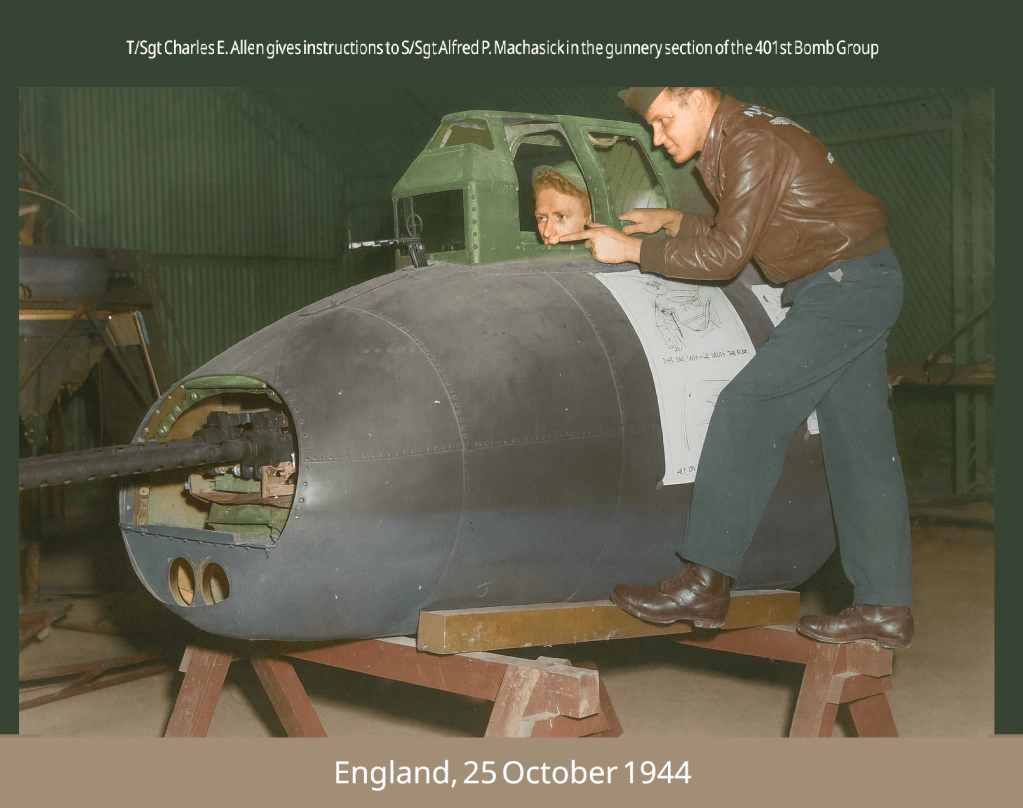
One year later, Chuck Allen was promoted to Tech Sergeant (TSgt.) and started serving as gunnery instructor with the 8th Air Force in England. He used his skills and experience to teach new recruits for air raids. TSgt. Allen’s division won a Presidential Citation for how successful their missions were against the Nazi’s. It was also reported that he had been awarded the Air Medal and two Oak Leaf Clusters.
In 1945, TSgt. Allen was honorably discharged from United States Army Air Force. Because I was not able to get ahold of his service record, we do not know which other medals he was awarded; however, it is safe to assume that he was heavily decorated. After the war, Chuck Allen went back to work at Studebaker until they went out of business in the 1960s. After that, he was employed as a truck driver until his retirement. Chuck was also a member of the American Legion Post #308 and the Veterans of Foreign Wars Post #360. Charles “Chuck” Allen passed away at age 91 on July 28, 2014, in Osceola.
Charles “Chuck” Allen’s bravery is yet another example of the thousands of Mishawakans who risked their lives to preserve our country and our freedoms.
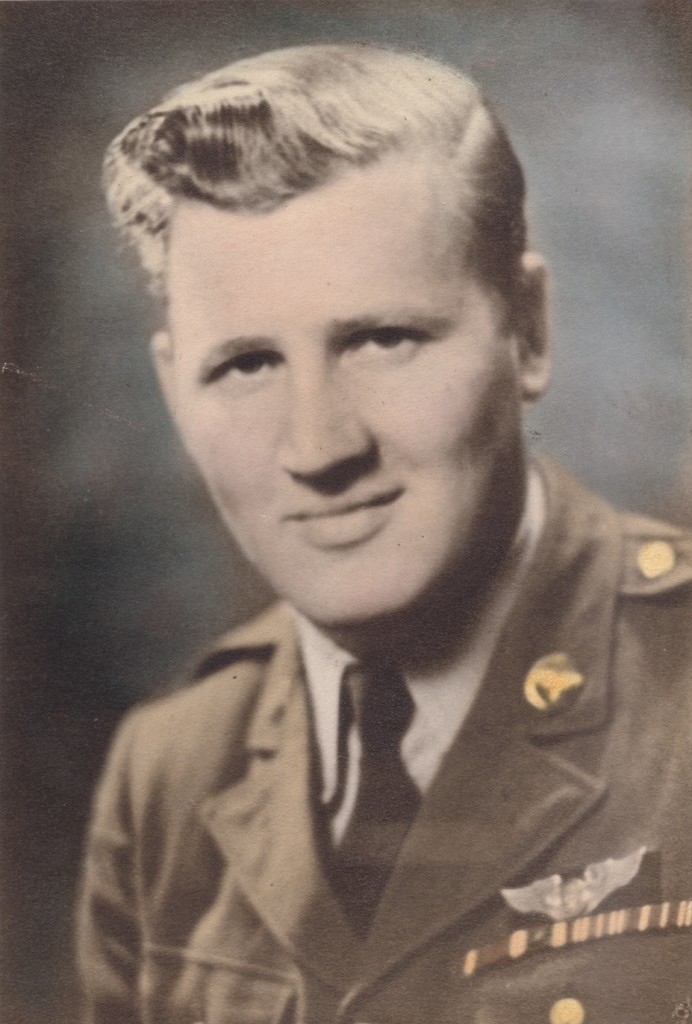
TSgt. Charles (Chuck) Allen
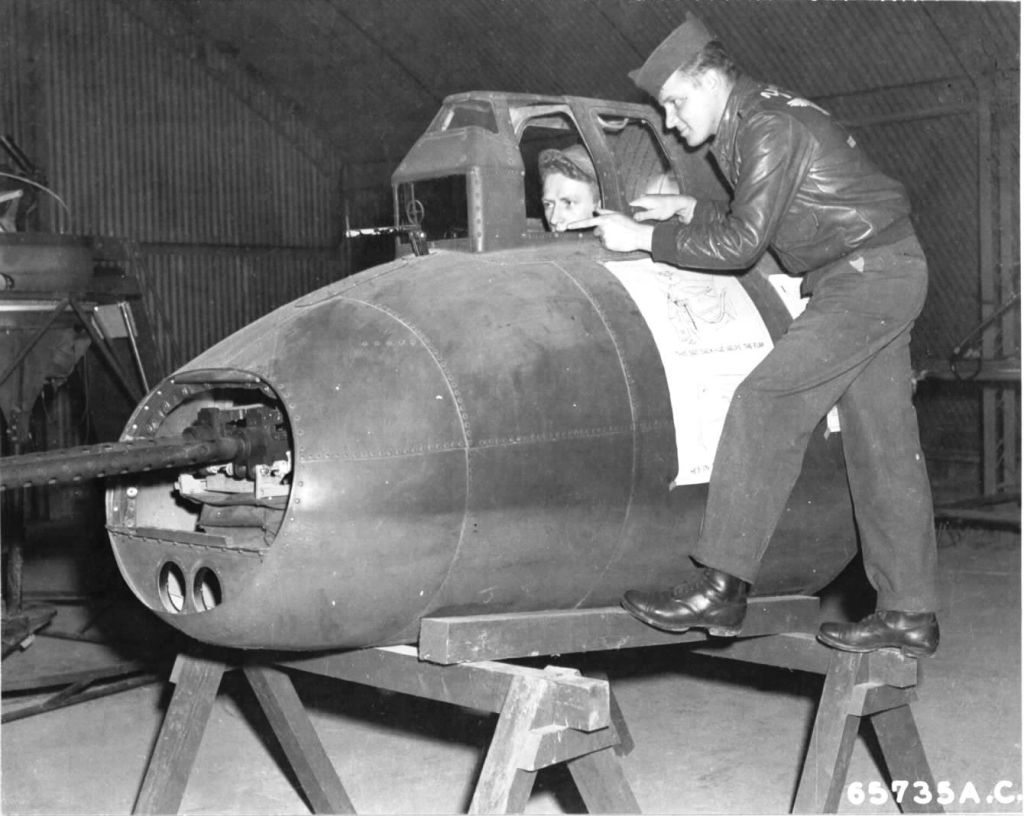
TSgt Charles E. Allen gives instructions to SSgt Alfred P. Machasick in the gunnery section of the 401st Bomb Group. England, 25 October 1944.
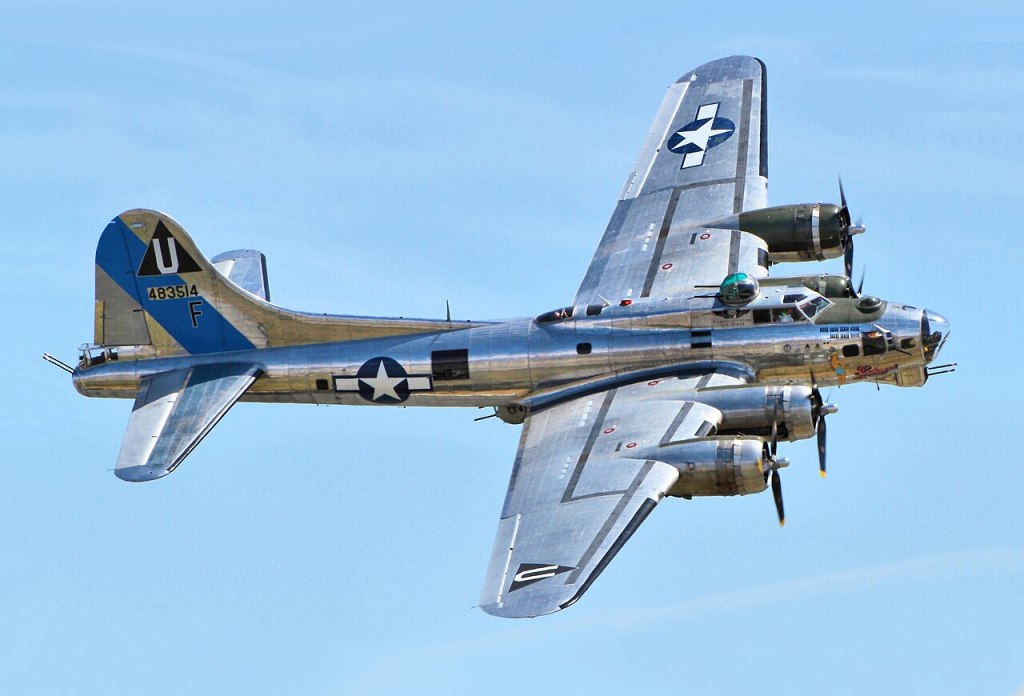
B-17 Flying Fortress
 Articles by Josh Lange
Leave a comment